Autonomy, relatedness and competence in UX design
People only spend energy on what motivates them. Autonomy, relatedness and competence are the three needs behind that motivation, and good UX design can meet them.
UX12 min read

At Nielsen Norman Group they like to say that users are not lazy, they are efficient. Everything people do — including using websites and apps — takes a certain amount of energy and focus. Since people don’t have unlimited energy or time, they stay efficient only at what they are motivated to do.
The psychologists Richard Ryan and Edward Deci, who studied human motivation in the field, developed a theory of motivation they called "self-determination theory", which describes how all humans have 3 basic psychological needs that guide how they use their time and energy:
- The need for autonomy;
- The need for relatedness;
- The need for competence;
It turns out that people tend to be motivated to do anything that satisfies these three needs.
People also have greater psychological well-being when these needs are met, because they are interconnected. Almost anything that can help meet them will probably show some effect.
The better something can meet these needs, the greater the motivation and the sense of well-being. Let’s look at each of the three human needs and then consider how good UX design can meet them in a way that effectively motivates users.
Autonomy
When people have autonomy, they can make choices aligned with their priorities and values, instead of being forced to do things the way others dictate. For example, why do most of us long for the weekend?
Throughout the work week, we have limited autonomy over how we use our time: we have to get up, go to school or work, attend meetings, meet deadlines and generally work the way someone else dictates. On the weekend, though, we are free to decide how to use our time — we have much more autonomy.
Relatedness
Being related to others means that people feel understood and supported by others in a meaningful and consistent way. We are inherently social creatures, which means that, whether we are introverts, extroverts or somewhere in between, we thrive when we interact meaningfully with others.
Consider someone who takes a new job. At first, they will probably feel stressed about going to work every day because there is no one they feel connected to. However, as they start getting to know people at work and build deep relationships, they start interacting with their coworkers and enjoy being there. That’s because their job is now meeting their need for relatedness.
Competence
People don’t like feeling incompetent. Competence means that we can succeed when we engage in a task.
Someone who goes skiing for the first time will struggle with the equipment, fall many times, feel cold and get frustrated watching the experienced skiers around them. If you invite them to ski a second time, they will probably hesitate, because they won’t feel competent. Only after the person has spent enough time developing the skill will they be competent enough to enjoy skiing.
Why care about the three human needs in UX Design?
Do you prefer that people use your products because they need to or because they want to?
Designs that meet people’s fundamental needs will be pleasant and easy to use. These qualities are what motivate users to keep using any product or service. We often call this kind of thing a "deep pleasure experience". Although we can’t always change the types of tasks users must perform in a given industry (for example, manufacturing or government tasks), designing for autonomy, relatedness and competence can improve someone’s experience while performing them.
Autonomy
Design that embodies autonomy lets users be in control.
Letting people choose how to use an interface helps them feel ownership of that experience and, as a result, often leads them to place greater personal value on that product because of their investment of time and energy. Sometimes, implementing autonomy can be as simple as letting users configure an app, choose custom colors or view content at their own pace.
Gamified experiences often build autonomy into their designs. Properly designed gamification gives users varying degrees of freedom in choosing their path through the experience.
Duolingo (a language-learning app) and Mimo (an app for learning to code) give users the freedom to choose which content to engage with and when to move on to other levels.
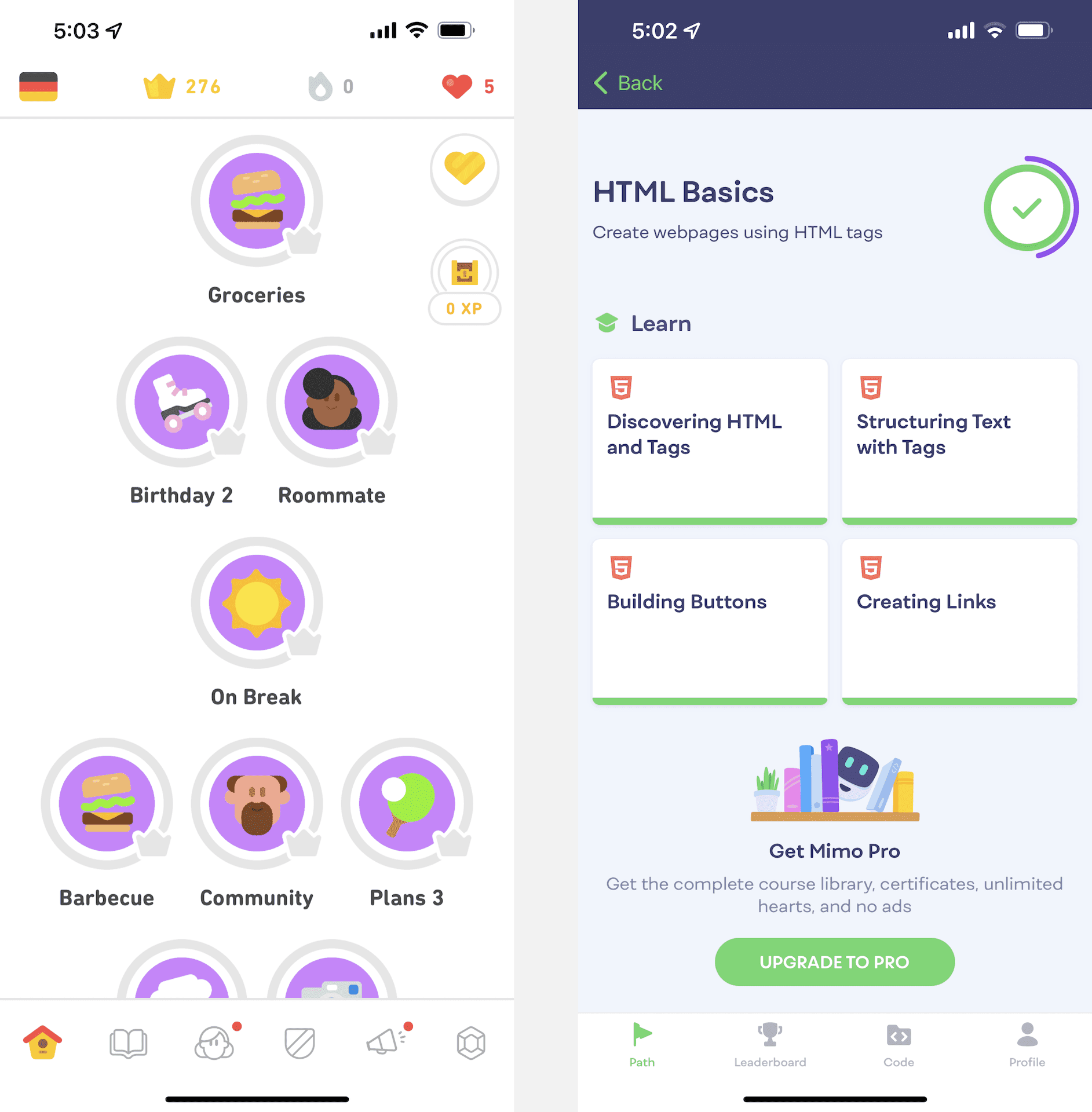
Duolingo (left) and Mimo (right) are gamified apps that support autonomy by letting users select the order and pace at which they learn the content. Users are also free to decide the level of mastery they want to reach.
Design that forces users down a predetermined path unnecessarily limits their autonomy.
Justanswer.com requires users to enter information into a chat feature without providing any other means of accessing the content. Although this design somewhat mirrors the experience someone might have in a lawyer’s office, it locks users into a predefined way of interacting with the site. (It’s also not recommended to force users to rely entirely on text-input features.) This site could offer other ways to learn what Kansas Law has to offer by displaying categories, common problems or even a frequently-asked-questions page.

Justanswer.com forces users to type their problem into the chat feature to get help. It doesn’t offer categories or common problems.
Relatedness
Individuals are satisfied when they perceive that others share their perspective and understand their situation.
Figuring out how users feel at different moments, and how to build products that relate to them, can be a hard challenge. Most of the time, relatedness develops over long periods of time, but is influenced by many small interactions. The most common methods for discovering opportunities to strengthen the relationship with users are traditional UX research strategies, such as user interviews and diary studies. These opportunities to meet users’ relatedness needs are often represented in a customer journey map.
One way designers can show users that they understand their needs is to limit messages to what users perceive as the most useful and relevant content. There are few things more capable of convincing a user that they are understood than a timely message with simple, useful content — especially when a system doesn’t send irrelevant, useless content between the effective messages .
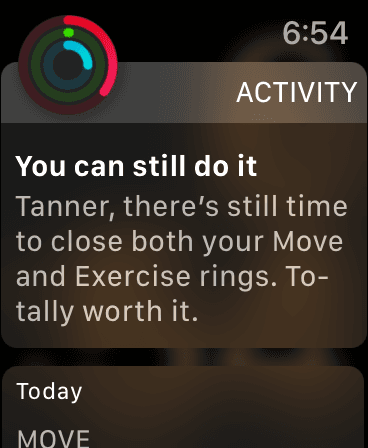
This message on the Apple Watch connects effectively with the user because it uses an encouraging, motivational tone. The timing of the suggestion (early in the evening) also makes it realistic and shows an understanding of the user’s abilities and circumstances.
When someone you thought you knew well calls you by the wrong name, it can be hard for them to recover from that mistake. Likewise, it is hard for an organization to recover from clearly showing that it doesn’t understand (or care about) the user’s current situation.
Right after a new phone case was purchased, Peel sent four promotional texts in one week — trying to sell more phone cases to the same user! These messages showed no understanding of the person’s needs.
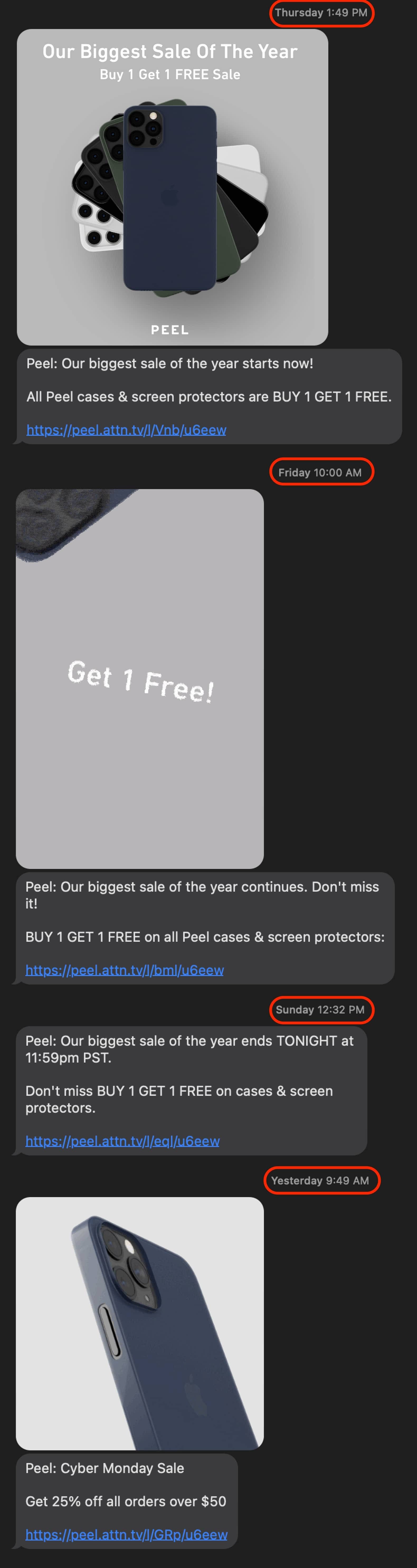
Immediately after a customer bought a new phone case, Peel repeatedly tried to convince them to buy additional cases.
Users are more likely to stick around when they feel they can trust a company or organization. Judgments about trustworthiness are made while browsing websites, using mobile apps and receiving messages. Helping users feel that you understand their individual needs can show empathy and strengthen their sense of relatedness with your organization.
Another way to help users meet their need for relatedness is to make communication between individuals easier, that is, to let people connect with each other. Although this kind of relatedness is more easily achieved in industries that build communication products, it can also be as simple as helping users share content with other people or including them in their workflows.
Competence
As designers, we are excited to create as many useful features and services as possible in our products. Although it is our job to create designs as powerful as possible, many features may go unused if we don’t help users become competent at using them. Competent use of a system leads to greater satisfaction, confidence, efficiency and many other positive outcomes.
That said, user competence for products like simple mobile apps isn’t always achieved efficiently through tutorials and onboarding. Users can’t be expected to read a manual before using an app because of the high interaction cost and cognitive burden.
Often, it is much better to introduce tooltips or helpful overlays at the moments when users run into situations where they don’t know what to do (that is, it’s better to favor pull revelations over push). Although this type of assistance has become common in many recent projects, it is still commonly misused. It’s crucial to remember that the ultimate measure of success for all guidance strategies is whether they help users become more competent at using the product. If user testing reveals that guidance strategies make no real difference, spend your time and effort improving the design — not writing instructions.
If it’s easy to become competent at using a system, then the system is very useful.
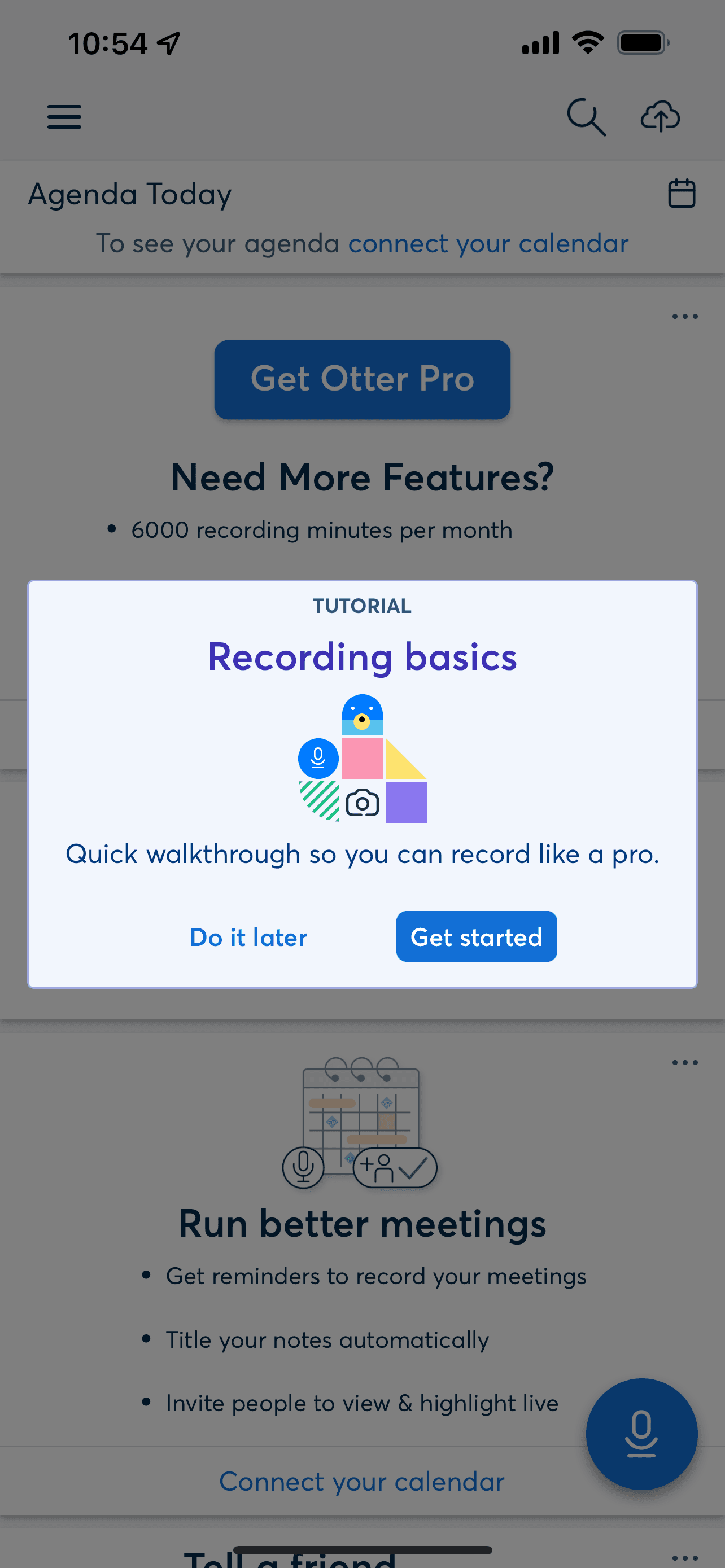
Good. When the app is first opened, Otter suggests a simple tutorial for a few basic features of the app. In theory, tutorials can help some users become more competent, but often there is no effect, or the tutorial is ignored entirely.
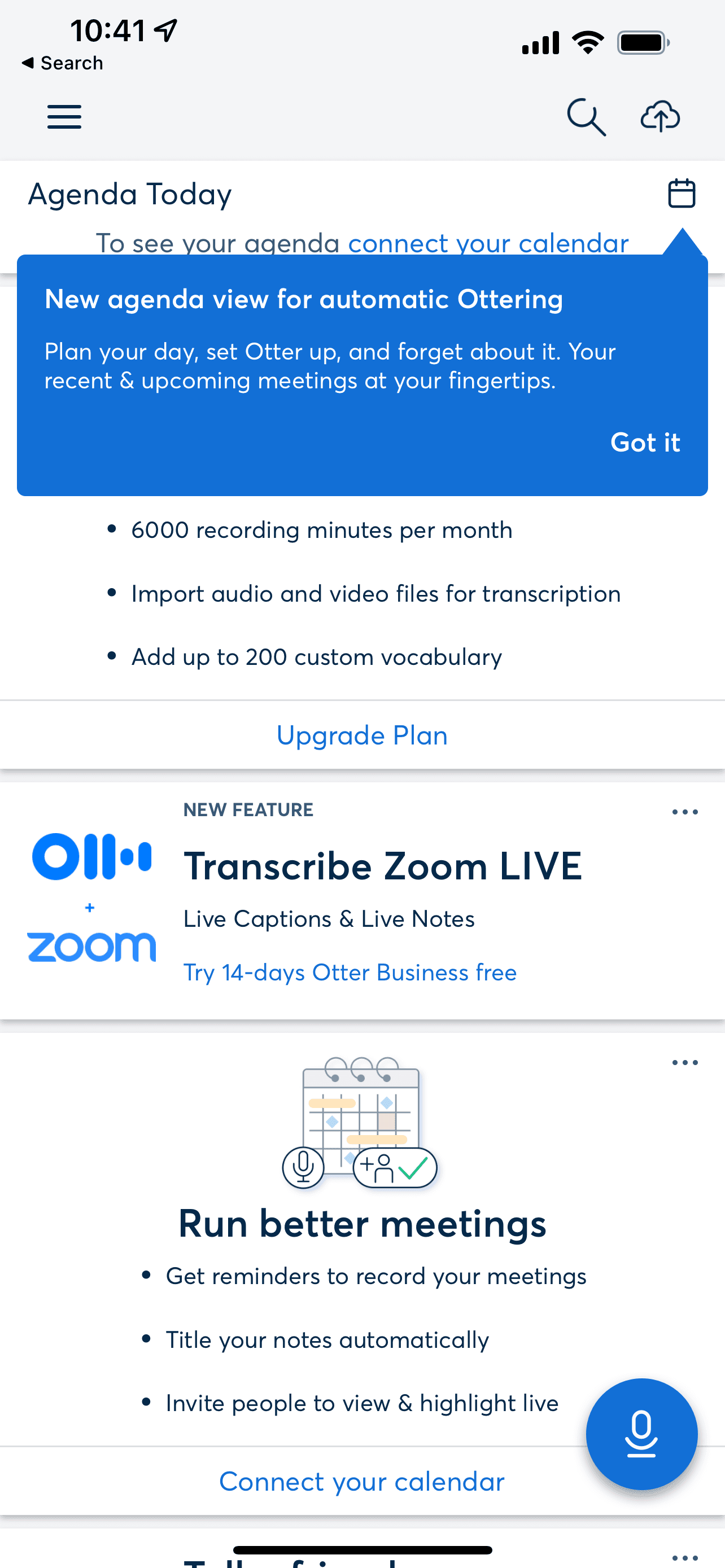
Better. Otter waits to give this tip until the user has opened the app several times, and focuses on just one potential action the user can take. However, this tip was sent to the user before they showed any interest in using the calendar or agenda features.
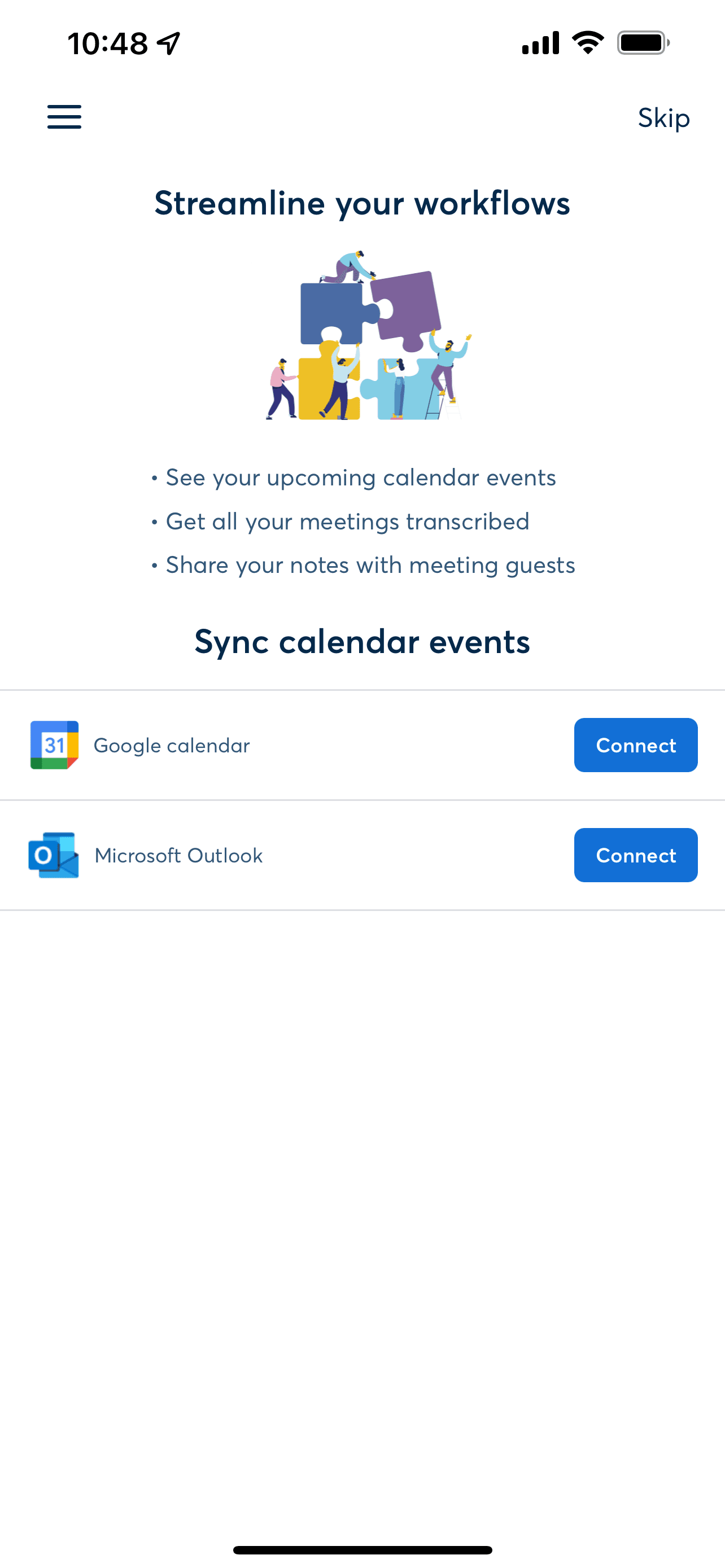
Better. After the user selected My Agenda for the first time from the hamburger menu, this screen was presented to show how to use the calendar feature. This pull method is more effective at helping users become competent with a new tool.
It is extremely frustrating and discouraging for users when a complex design doesn’t help them become competent. They may end up wasting significant time looking for help elsewhere (internet searches or third-party video tutorials) in order to become competent. This is especially true in the domain of complex applications.
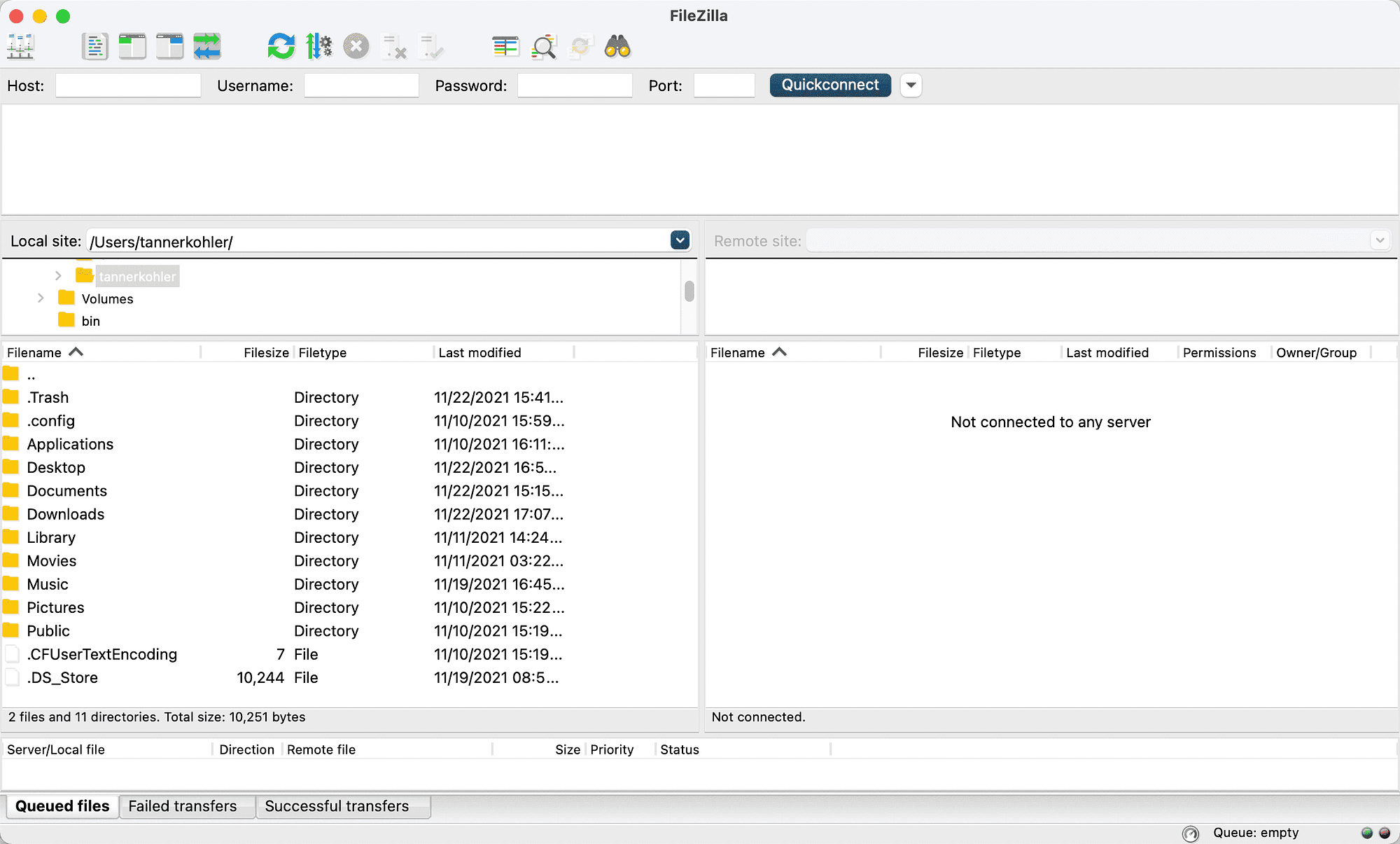
FileZilla (a file transfer protocol service) doesn’t provide instructions to help new users become competent at using it. Users must figure out how FileZilla works on their own.
The three needs can sometimes conflict
In some cases, it becomes a challenge to accommodate autonomy, relatedness and competence in a single interface or design. One example of such a conflict is the use of a wizard. On one hand, a wizard can greatly increase the competence of users who need to enter large amounts of complex information or go through complicated, branching processes. However, by definition, wizards limit autonomy — they give control to the system and take it away from the user.
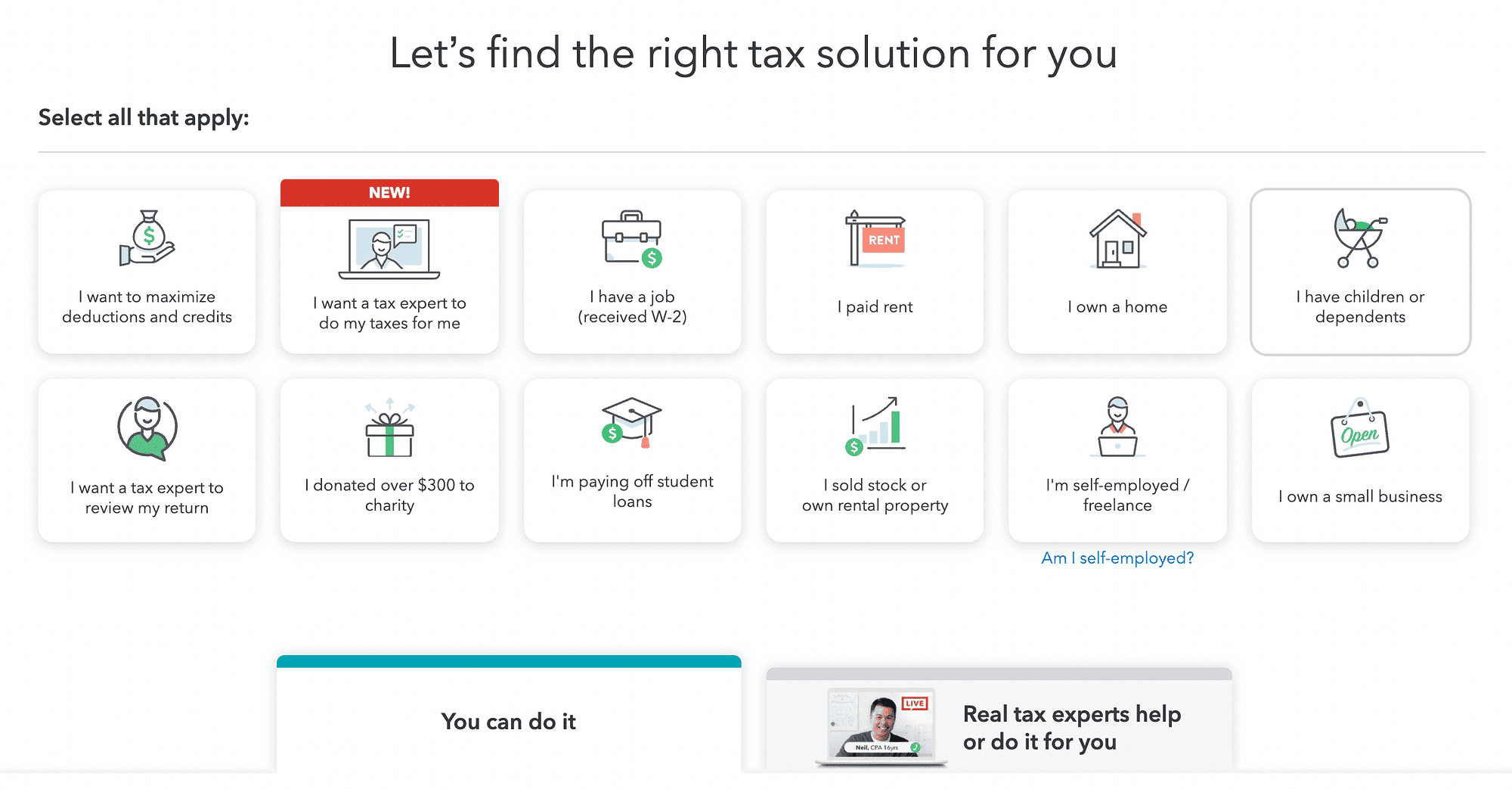
TurboTax uses a wizard strategy to help users complete complex tasks competently (paying taxes). However, this approach asks users to give up much of their autonomy, since the system decides what is relevant to them based on their selections.
In cases like these, it’s essential to test designs with potential users to determine which of the three needs is the priority. Do users find it more useful to give up autonomy to be more competent, as in the case of TurboTax, or do they prefer to struggle a bit more with complexity to preserve their autonomy?
Meeting all three needs
It’s worth briefly illustrating the ways in which two different industries have managed to meet all three fundamental needs. The two types of examples mentioned here are open-world video games and collaborative design tools.
Open-world video games
Open-world video games, like Minecraft, meet the three needs in the following ways:
- Autonomy: Users have almost total freedom to roam and explore as they wish. As users put energy into their choices in these open environments, they connect powerfully to their custom creations.
- Relatedness: Users can play together with others in the same world and work collaboratively to build and have fun. In many cases, live calls or chats are supported to increase the richness of communication.
- Competence: These games are usually easy to learn. When well designed, they also let experienced users discover shortcuts and hidden mechanics to make gameplay more efficient.

Minecraft successfully addresses the need for autonomy, relatedness and competence, since it gives players freedom in how they play, supports connection with others and is easy to learn.
Collaborative design tools
Collaborative design tools, like Figma, contrast nicely with open-world video games because they are domain-specific productivity tools that also meet the three fundamental needs in the following ways:
- Autonomy: Users can create a practically unlimited number of different designs using the features provided in the tool. There is no concern about limits on the number of icons, shapes and so on that can be used, nor, in most cases, about storage capacity limits.
- Relatedness: Users can easily share projects with any number of colleagues, as well as work simultaneously on the same projects in ways that support each other’s work.
- Competence : These types of tools usually provide a wealth of helpful guidance, such as keyboard shortcuts in drop-down menus, tutorials for new features and active forums for questions and help. (Such forums also help meet the need for relatedness).
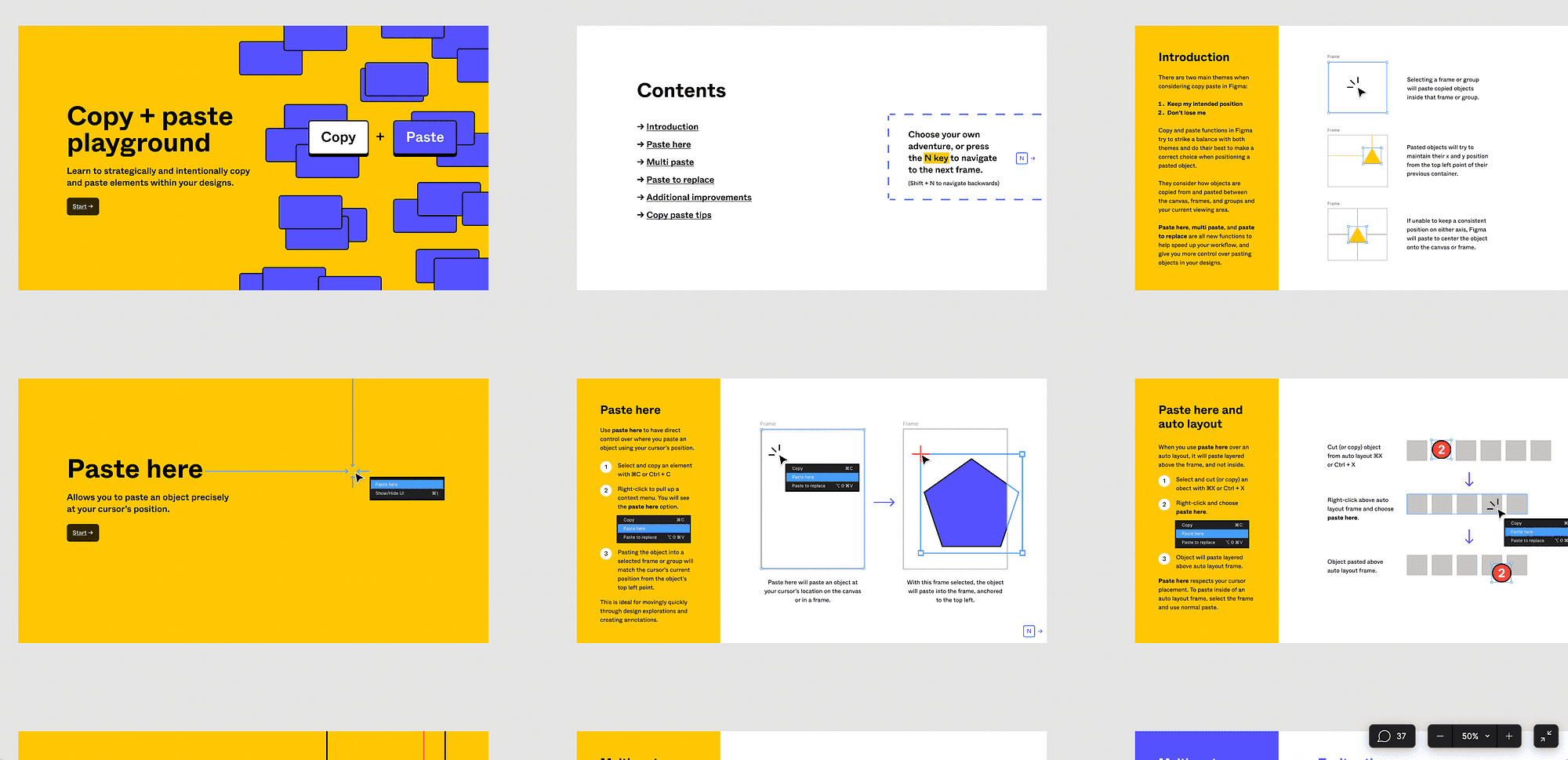
Figma, a prototyping tool, also supports all three needs (autonomy, relatedness, competence), offering designers practically unlimited resources, the ability to collaborate with others, as well as support in learning the many features available.
Conclusion
It is almost certain that looking closely at today’s popular digital products will usually reveal ways in which those products accommodate people’s needs for autonomy, relatedness and competence. This effort usually looks different depending on the industry and the focus of users’ tasks, but you can be sure that all humans have these three needs and will be more motivated to use a product that accommodates them — regardless of the industry.
It’s important to consider autonomy, relatedness and competence in all projects because:
- Users will be more motivated to use products and enjoy the experience as a result.
- We owe it to our users to create designs that increase their well-being and satisfaction.
Reference
Edward L. Deci and Richard M. Ryan. 2012. The Oxford Handbook of Human Motivation (1st ed.). Oxford University Press, Oxford, United Kingdom.
Summary: Meeting these 3 fundamental psychological needs in our products increases user motivation and well-being. Users will be more engaged and more likely to use our designs.
By Tanner Kohler on January 9, 2022
Topics: Psychology and UX, Behavior Patterns, Persuasive Design
This is a translation of the article: Autonomy, Relatedness, and Competence in UX Design by Tanner Kohler on January 9, 2022.
Originally published onMedium(opens in a new tab)
Keep reading
UX2025
Product2024