Cognitive psychology applied to UX
Before designing an interface, it helps to understand how the mind perceives, pays attention, remembers and builds expectations, and how that turns into design decisions.
UX11 min read
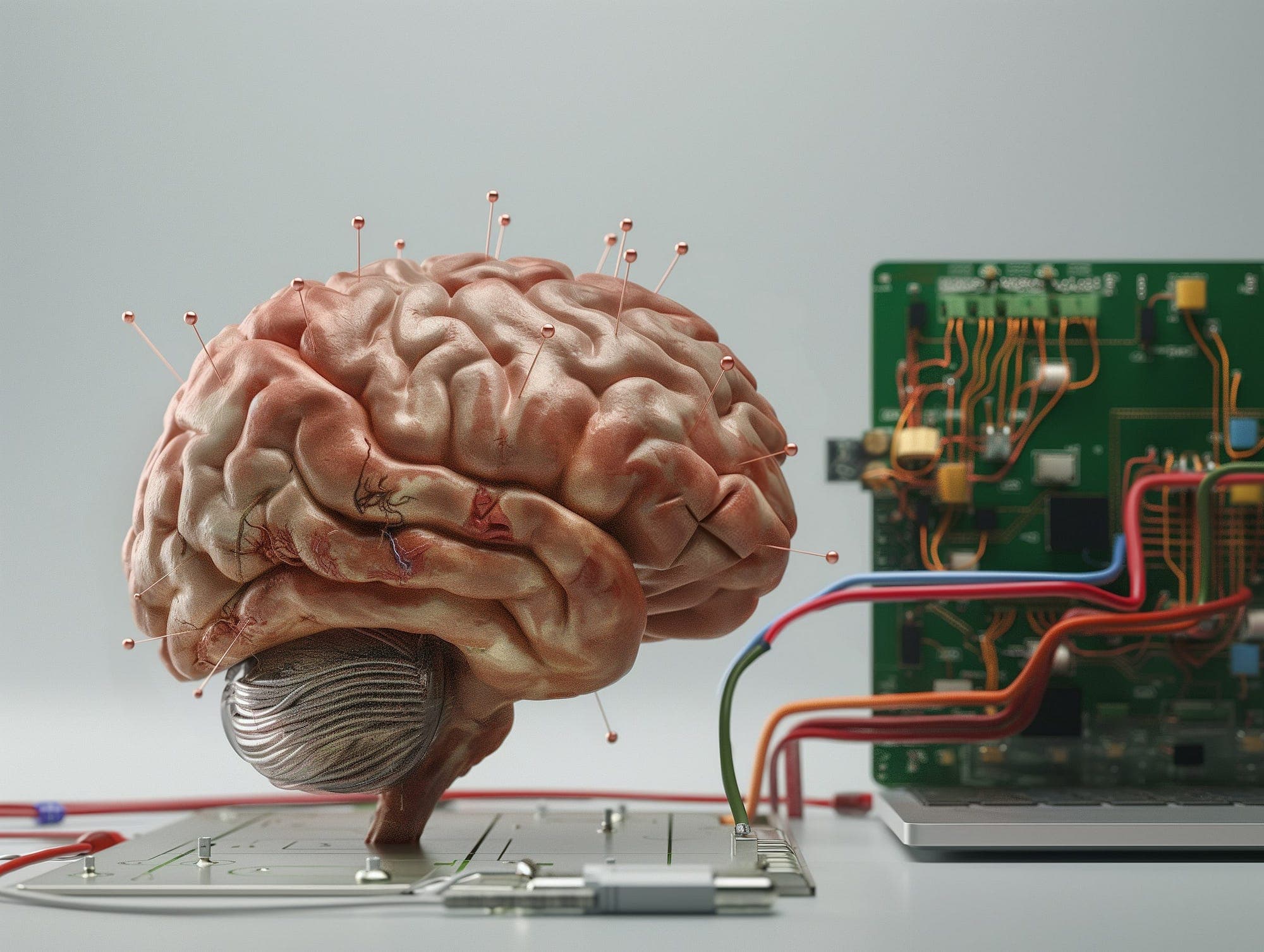
Before exploring Cognitive Psychology applied to UX, it's important to understand that User Experience goes far beyond what we see on the screen. It is, in fact, a working philosophy.
UX is not necessarily a profession exclusive to designers or developers, but an interdisciplinary approach.
UX is often confused with usability, usability testing, information architecture, service design or even design thinking. Although it includes elements of all of these, UX is something bigger: an innovative way of meeting users' needs and desires, in digital or physical environments, always focused on creating value and innovation.
As UX professionals, our role is to map and understand the user experience. We gather requirements, analyze variables, filter information and translate it all into clear project specifications. Our mission is to make sure every stage of the process is grounded in a deep understanding of people's behaviors and needs.
Now, let's dig into Cognitive Psychology and see how it connects to the world of UX.
What is Cognitive Psychology?
Cognitive Psychology is a relatively recent branch of psychology that began developing as a specific field in the 1950s, in a historical context marked by the post-World War II era and the Cold War.
This field studies cognition, that is, the mental processes responsible for acquiring and processing information, such as memory, attention and perception. In other words, it investigates how the brain perceives, learns, remembers and thinks about the information it captures from the environment.
In short, Cognitive Psychology seeks to understand the inner mechanisms of the mind that let us interpret, store and use information in everyday life. This knowledge is fundamental to many areas, especially to understanding and improving the interaction between people and technology.

Have you ever stopped to think about your cognition?
Cognition is the process that lets us acquire, interpret and use information to navigate the world around us. Think about a few everyday situations:
- Why do objects seem farther away on foggy days?
- Why do we remember traumas or very happy moments of our lives, yet often forget the names of people we've known for years?
- Why are some people more afraid of flying than of driving, even knowing that car accidents are far more frequent?
These questions reflect how our brain perceives, stores and interprets information, often in ways that don't match objective reality. That happens because our cognition is influenced by factors such as attention, memory, perception and even emotions.
In the case of fog, for example, low visibility makes our brain interpret objects as farther away because of the lack of clear visual contrast. Traumas and happy moments, in turn, are tied to strong emotions, which boost our ability to remember, unlike neutral information such as names, which our brain tends to prioritize less. And the fear of flying? It's one more example of how our emotions can override statistics: plane crashes, though rare, are more dramatic and memorable, leaving a stronger impression than the everyday experience of driving.
Reflecting on our cognition is not only fascinating, it also helps us better understand how we think, feel and make decisions. These questions show that our mind is not merely logical, but shaped by perceptions and emotions that affect our choices and behavior.
Perception and the impact of our life history
In psychology, perception is a brain function that interprets sensory stimuli based on our past experiences (memories). This process organizes, interprets and gives meaning to the information captured by the five senses: sight, smell, touch, taste and hearing.

For example, imagine a meeting. A person eager to deliver good work may see the organizer as someone smart and competent. On the other hand, someone less engaged or uninterested may find the same person irritating or boring. This contrast shows how our experiences, emotions and context shape the way we perceive the world.
Besides the traditional sensory perceptions, human beings have additional capacities, such as time perception, which lets us grasp the duration, rhythm, order and simultaneity of events, and spatial perception, which helps us judge distance and the relative size of the objects around us.
Perception is not just a reflection of reality, but a unique, subjective construction based on our life history, emotions and current context. That trait makes it a fascinating element for understanding how each individual interacts with and interprets the world in their own way.
Attention, like a camera
Attention can be compared to a camera: we can adjust the focus to select and prioritize certain stimuli while ignoring others. This mechanism is essential for dealing with the massive volume of information we receive every day.
There are two main types of attention:
- Voluntary attention: Directed intentionally at something, like when we concentrate on a reading or a specific task.
- Involuntary attention: Automatically drawn by external stimuli, like a loud sound or an unexpected movement.

Every day, we are exposed to more than 1,500 ads and make between 500 and 1,000 small decisions. Our brain, unable to process all these stimuli, uses a mechanism called selective attention to filter what is most relevant. This process is a key piece of UX work: attracting and holding users' attention so they complete their main tasks, ignoring distractions.
Studies show that attention is most easily captured in specific situations:
- When facing a current need: For example, a hungry person will pay more attention to food ads.
- When exposed to something unpredictable: An unexpected element, like a single animation or sound, can attract attention.
- When there is a larger deviation from the standard stimulus: A design that stands out from the usual environment or breaks patterns is more likely to be noticed.
Attention is a limited resource, and understanding it in the context of UX is essential to creating effective interfaces that direct the user's focus strategically, maximizing the impact of the experience.
Memory, our brain's storage
Memory is like our internal storage system, able to record, store and retrieve information captured through the five senses (sight, smell, touch, taste and hearing). This process lets us access relevant information when we are exposed to certain stimuli.
Memory can be divided into two main categories:
- Short-term memory: A temporary, limited store, used to hold information for a brief period, like a phone number before writing it down.
- Long-term memory: Works like a complex network of nodes (stored information) connected by links. These connections vary in strength depending on the stimuli received and the importance assigned. This model is known as the associative network of memory, where new information is associated with existing knowledge, strengthening or creating new connections.

Although memory is a broad and multifaceted field, these basic concepts are fundamental to understanding the Mental Model, an approach that helps us map how people organize and process information. The Mental Model is an essential bridge for applying the principles of Cognitive Psychology to UX, creating experiences that are more intuitive and aligned with users' expectations.
Mental Model: Working with the obvious

“A mental model is our own conceptual model of the way an object works, events take place or people behave, which results from our tendency to give explanations for things. These models are essential to help us understand our experiences, predict the reactions to our actions and handle unexpected occurrences. We base our models on the knowledge we have, real or imaginary, naive or sophisticated.
Mental models are always built from fragmentary evidence, with a poor understanding of what is going on, and with a kind of naive psychology that postulates causes, mechanisms and relationships even when they don't exist.”
— Norman (from the book “The Design of Everyday Things, apud MARTINEZ 2003)
As Don Norman explains in his book “The Design of Everyday Things”, mental models are, by nature, incomplete, unstable and often built on a limited or even mistaken understanding of what is really going on. Even so, they are fundamental to our ability to interact with the world.
Mental models help us form an internal understanding of ourselves and of the things we interact with, creating our ability to make sense of and explain the events and objects around us.
The four elements of the Mental Model:
- Target system: Represents the real system the person is learning or interacting with.
- Conceptual model: A representation designed to provide an accurate, consistent and complete explanation of the target system.
- Mental model: An internal representation of the system, formed by the user, that evolves based on direct interactions with the system. It is often incomplete, limited and inconsistent.
- Scientist's model: A model that represents how the other models are created and understood.
How to map a Mental Model:
Although mapping mental models is a complex task, it is possible to create intentional, contextual stimuli that trigger memories and associations in users. For example, by introducing familiar elements, we can observe how specific groups of users navigate systems and interpret interfaces. This process helps us understand how people “pre-understand” the world and make decisions based on their previous experiences.
With this analysis, we can make important decisions in planning digital projects, such as:
- Content hierarchy.
- Menu structure.
- Choice of interface elements.
It is crucial to remember that each person has a unique mental model, shaped by their life experiences, memories and personal context. By studying mental models, we make room for a deeper understanding of concepts such as affordances, strengthening the foundation for creating more intuitive and effective user experiences.
Mental models are not just a resource for designing systems; they are the basis for connecting design with human expectations and perceptions. By mastering them, we create interfaces that speak directly to users' internal logic, promoting more satisfying and natural experiences.
Affordances: “Giving a clue” in Cognitive Psychology applied to UX

Although Donald Norman was not the creator of the term, he popularized it among interaction designers in his book “The Psychology of Everyday Things” (1988). For Norman, an affordance is something so intuitive that it needs no explanation to be used in everyday life. The greater the affordance, the clearer and more efficient the use of an object or interface.
Recently, I have been implementing the concept of “affordance thinking” on my team. Although it is a widely discussed term, it is still little known by many designers and web developers.
In the context of digital design, affordances help us anticipate and meet the user's needs strategically, even before we focus on tactical elements or visual design. As Norman says in an NNGroup article:
“Based on the concepts seen so far, we can reflect on and analyze the variables of the user experience from a strategic point of view, before addressing the tactical and objective issues of building the screens (interfaces). This way, we separate and differentiate usability problems (comfort and cognitive adequacy in the interaction) from conceptual and market problems, related to the product's positioning and life cycle (mental model).” — Donald A. Norman
The two types of affordances defined by Norman:
- Real affordances:
Concrete, direct clues about how an object or interface should be used. Examples include:
- Computer keyboard and mouse.
- Gestures for swiping components sideways.
- Arrows indicating direction to move to the next item. - Perceived affordances:
Abstract or subtle clues that indicate how to use artifacts in an interface. Examples include:
- Links that change color on hover.
- Menus with submenus marked by arrows.
- “+” icons that indicate hidden content (like an accordion).
- Call-to-actions (CTAs) that suggest interactivity, often reinforced by visual changes when clicked or pressed.
Summing up Affordances
Affordances provide important clues about how to use objects or interfaces, and are directly correlated with the mental model users build based on cognitive psychology concepts. In digital design, they are essential to guide interaction and navigation, helping to close the product concept and ensuring clarity of use.
For example, buttons like “forward” and “back” in web browsers use affordances to signal their functions, while visual or tactile feedback reinforces these clues during the interaction. These elements make interfaces more accessible, intuitive and aligned with users' expectations, contributing to a smoother and more satisfying experience.
Building affordances into design not only makes use easier, it also builds trust and predictability, factors that are critical to the success of any interface.
Summing up the Cognitive Psychology concepts applied to UX
We can highlight two important observations:
- Immediate recognition by the user:
When an artifact is recognized instantly by the user, we are dealing with a phenomenon of “thirdness”. This means the object or element is part of a memory associated with known patterns, such as predictions, connections between qualities and facts, and pre-established expectations, all based on the user's mental model. - Interfaces built on the obvious:
Interfaces should be designed following widely recognized usage patterns, so they cause no doubt or confusion during the interaction. By adhering to these patterns, we avoid errors and frustration, reduce cognitive overload and help the user learn faster how to use the system. This, in turn, promotes a more efficient and satisfying experience, keeping the user's memory free for more complex tasks.
Designing with a focus on cognitive psychology means understanding that less effort and more predictability result in interfaces that are more intuitive, pleasant and functional.
References
- Administração de Marketing — Kotler, Keller
- Introdução à Psicologia Cognitiva — Robert J. Sternberg
- Modelo mental: conheça algumas definições — Renata Zilse
- Algumas Observações sobre Modelos Mentais — Donald A . Norman
- Drawings by Yukai Du
Originally published onMedium(opens in a new tab)
Keep reading
UX2025
Product2024